
acquired January 1, 1850 - January 1, 2000
download large image (453 KB, PNG, 1440x720)
Occasionally, short-term meteorological conditions merge with ongoing human emissions to produce extreme outbreaks of air pollution. In January 2013, a blanket of industrial pollution enveloped northeastern China. In June 2013, smoke from agricultural fires in Sumatra engulfed Singapore.
In most cases, the most toxic pollution lingers for a few days or even weeks, bringing increases in respiratory and cardiac health problems at hospitals. Eventually the weather breaks, the air clears, and memories of foul air begin to fade. But that’s not to say that the health risks disappear as well. Even slightly elevated levels of air pollution can have a significant effect on human health. Over long periods and on a global scale, such impacts can add up.
But exactly how much exposure to air pollution do people around the world get? And how much health damage is it causing? Since there are gaps in networks of ground sensors, University of North Carolina earth scientist Jason West is leading an effort to answer those questions using computer models that simulate the atmosphere.
In 2010, West published an estimate of the global health effects of air pollution based on a single atmospheric model. More recently, West and colleagues thought they could improve their calculations by using results from a range of atmospheric different models—six in all—rather than relying on just one. In 2013, they published their results in Environmental Research Letters, concluding that 2.1 million deaths occur worldwide each year as a direct result of a toxic type of outdoor air pollution known as fine particulate matter (PM2.5).
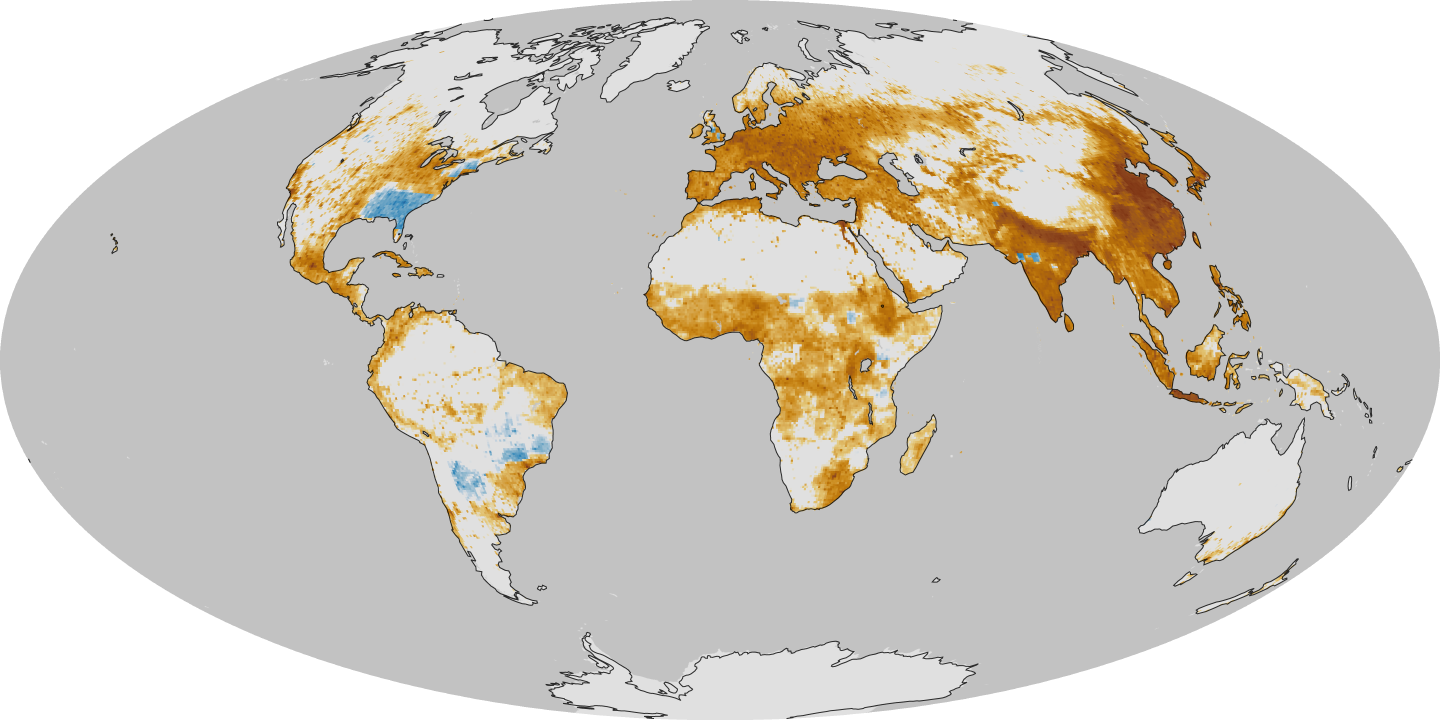
The map above shows the model estimate of the average number of deaths per square kilometer per year due to air pollution. The researchers used the difference in pollution levels between 1850 and 2000 as a measure of human-caused air pollution. Dark brown areas have more premature deaths than light brown areas. Blue areas have experienced an improvement in air quality relative to 1850 and a decline in premature deaths.
Fine particulate matter takes an especially large toll in eastern China, northern India, and Europe—all areas where urbanization has added considerable quantities of PM2.5 to the atmosphere since the start of the Industrial Revolution. In these heavily populated and polluted areas (shaded dark brown), air pollution created by humans causes more than 1,000 premature deaths per year per square kilometer.
A few areas—such as the southeastern United States—saw PM2.5 concentrations decline relative to pre-industrial levels (shown in blue), suggesting that premature mortality due to air pollution declined. In the southeastern United States, the decrease in PM2.5 was likely related to a decline in local biomass burning that has occurred over the last 160 years.
References
Earth Observatory image by Robert Simmon based on data provided by Jason West. Caption by Adam Voiland.Instrument: Model
download large image (453 KB, PNG, 1440x720)
Occasionally, short-term meteorological conditions merge with ongoing human emissions to produce extreme outbreaks of air pollution. In January 2013, a blanket of industrial pollution enveloped northeastern China. In June 2013, smoke from agricultural fires in Sumatra engulfed Singapore.
In most cases, the most toxic pollution lingers for a few days or even weeks, bringing increases in respiratory and cardiac health problems at hospitals. Eventually the weather breaks, the air clears, and memories of foul air begin to fade. But that’s not to say that the health risks disappear as well. Even slightly elevated levels of air pollution can have a significant effect on human health. Over long periods and on a global scale, such impacts can add up.
But exactly how much exposure to air pollution do people around the world get? And how much health damage is it causing? Since there are gaps in networks of ground sensors, University of North Carolina earth scientist Jason West is leading an effort to answer those questions using computer models that simulate the atmosphere.
In 2010, West published an estimate of the global health effects of air pollution based on a single atmospheric model. More recently, West and colleagues thought they could improve their calculations by using results from a range of atmospheric different models—six in all—rather than relying on just one. In 2013, they published their results in Environmental Research Letters, concluding that 2.1 million deaths occur worldwide each year as a direct result of a toxic type of outdoor air pollution known as fine particulate matter (PM2.5).
The map above shows the model estimate of the average number of deaths per square kilometer per year due to air pollution. The researchers used the difference in pollution levels between 1850 and 2000 as a measure of human-caused air pollution. Dark brown areas have more premature deaths than light brown areas. Blue areas have experienced an improvement in air quality relative to 1850 and a decline in premature deaths.
Fine particulate matter takes an especially large toll in eastern China, northern India, and Europe—all areas where urbanization has added considerable quantities of PM2.5 to the atmosphere since the start of the Industrial Revolution. In these heavily populated and polluted areas (shaded dark brown), air pollution created by humans causes more than 1,000 premature deaths per year per square kilometer.
A few areas—such as the southeastern United States—saw PM2.5 concentrations decline relative to pre-industrial levels (shown in blue), suggesting that premature mortality due to air pollution declined. In the southeastern United States, the decrease in PM2.5 was likely related to a decline in local biomass burning that has occurred over the last 160 years.
References
- Annberg et al, (2010, April 9) An Estimate of the Global Burden of Anthropogenic Ozone and Fine Particulate Matter on Premature Human Mortality Using Atmospheric Modeling. Environmental Health Perspectives, (118), 1189-1195.
- Discover (2013, July 17) Air Pollution Kills More Than 2 Million People Every Year. Accessed September 16, 2013.
- Institute of Physics (2013, July 12) Researchers estimate over two million deaths annually from air pollution.Accessed September 16, 2013.
- Silva, R. et al, (2013, March 23) Global premature mortality due to anthropogenic outdoor air pollution and the contribution of past climate change. Environmental Research Letters, 8 (3).
Earth Observatory image by Robert Simmon based on data provided by Jason West. Caption by Adam Voiland.Instrument: Model
13h